

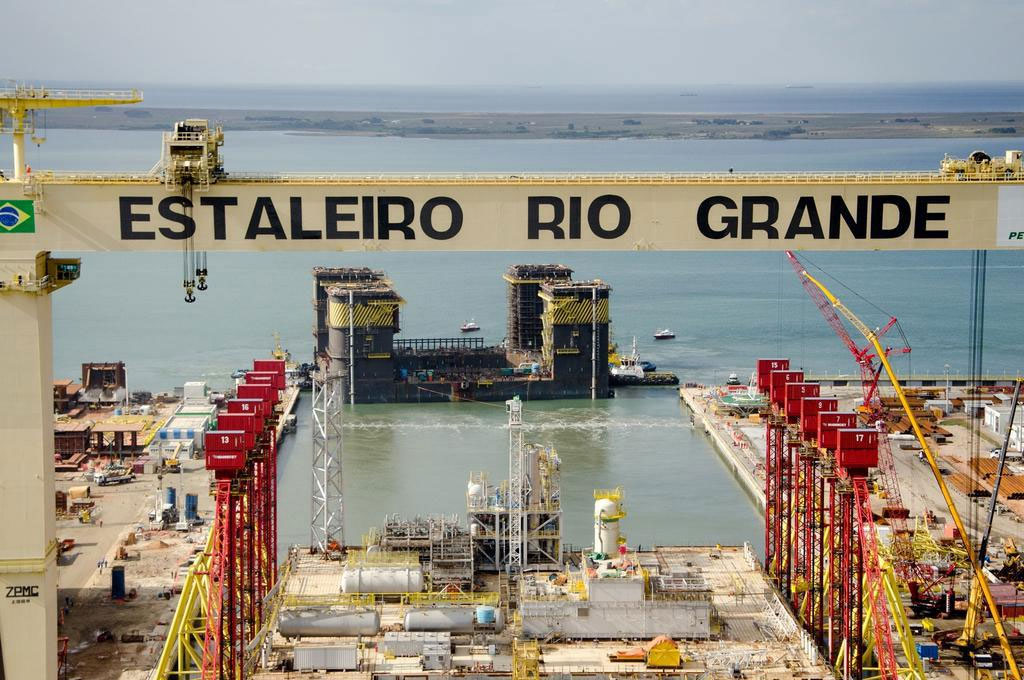
The Rio Grande shipyard, on the southern coast of Rio Grande do Sul, has been given a new purpose after the cancellation of the construction of oil platforms. Ecovix, the shipyard's administrator, which is undergoing judicial recovery, was one of the targets of Operation Lava Jato.
The structure now serves as a support base for loading large ships. Vessels often leave the Port of Rio Grande without being fully loaded due to the depth of the channel, which poses the risk of running aground.
Three operations of this type have been authorized by the National Waterway Transportation Agency. The Rio Grande do Sul Port Authority wants authorization from regulatory agencies to make this more frequent.
With the stop at the shipyard, where the depth is greater because the channel has been dredged, the vessels can be loaded with what was missing.
Thanks to the operation, ships can leave the port fully loaded, which contributes to exports and generates income for the state.
Furthermore, it reduces costs for companies, as it prevents vessels from stopping in Santa Catarina to finish loading before continuing their journey.
In 2010, Petrobras hired Ecovix to manufacture eight platform hulls. Three years later, the Lava Jato investigation uncovered irregularities and arrested shipyard directors. In December 2016, the nearly R$10 billion project was canceled and 3,2 workers were laid off.
Source: G1