
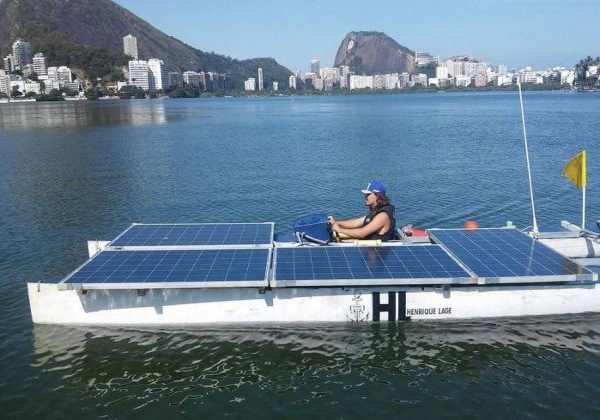
Solar-powered boats that don't emit polluting gases? It seems like something from the distant future, but the technology to develop boats with electric propulsion motors that are powered by batteries charged by solar panels exists and is already in use around the world.
In Brazil, unfortunately, this engineering is still little explored, with research project initiatives, but no effective commercial application.
To reverse this situation and promote this technological alternative, the Federal University of Rio de Janeiro (UFRJ) organizes an annual competition of solar vessels (competition prototypes) called Desafio Solar Brasil.
The full professor of the Department of Electrical Engineering at UFRJ, Walter Issamu Suemitsu, explains that the aim is to gradually eliminate pollution generated by combustion and hybrid propulsion systems.
“Current propulsion systems are powered by combustion or hybrid engines, that is, a combustion engine drives an electric generator that in turn powers the electric propulsion motor. Hybrid systems produce fewer greenhouse gases than purely combustion engines,” says Suemitsu.
The professor states that, in principle, the electric propulsion system can be applied to any type of vessel.
“The main advantage is the lack of greenhouse gas emissions, which brings great benefits to the environment by reducing pollution. Other advantages include the greater efficiency of electric motors, reduced volume and weight without reducing power, and ease of maintenance,” says Suemitsu, who adds: “currently the biggest disadvantage is the need to use batteries for energy storage.”
The trend is already a reality in European countries, such as France and Germany, which are studying the ban on combustion vehicles from 2040.
According to the UFRJ professor, there is little data on the subject, but the most recent data reports that, in 2013, there were 30 fully electric passenger vessels in France. “In addition to passenger transport, the application on Navy ships and boats is being studied,” he states.
In Brazil, in 2014, the Ekko Brasil Institute (IEB) in partnership with the Federal University of Santa Catarina (UFSC), received a vessel that uses solar energy to be used in research, social mobilization and environmental education work in Lagoa do Peri, in Santa Catarina.
For those interested in exploring the topic further, Professor Suemitsu will be presenting a free lecture in August in Rio de Janeiro: “New electric ship propulsion systems and the new concern for the environment”.
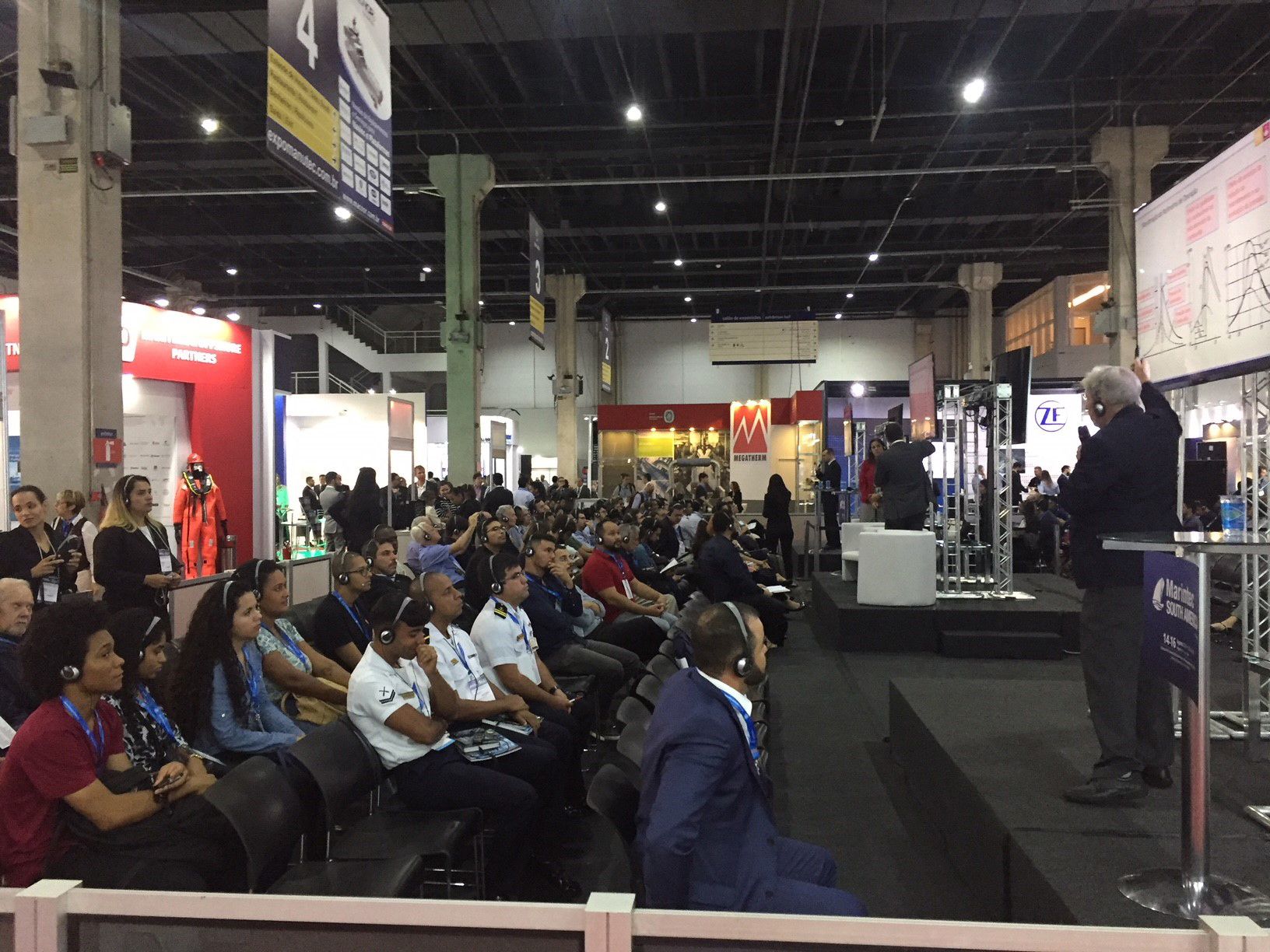
The lecture is part of the content program of Marintec South America, a naval sector event, which takes place from August 14 to 16, at the SulAmérica Convention Center.
In total, 48 lectures, 5 workshops and 9 case studies will be presented during the three days of the event, from 14 pm to 18 pm.
Marintec South America is a business meeting point to leverage innovations and connect with the maritime community in South America. It brings together national and international shipowners, shipyards, manufacturers and suppliers to increase productivity, professional qualification, foster new technologies, investments and supply and demand for the entire chain.
Source: Ambiente Energia