
The Navy is committed to modernizing its fleet by placing orders with national shipyards and has been conducting an institutional coordination process with the highest levels of government to create a naval hub in Brazil with several clusters distributed throughout the country. The challenge is budgetary and financial viability, but the plan involves a partnership with Emgepron. Among the funding and capitalization alternatives, the allocation of 10% of the resources from the Merchant Navy Fund is being evaluated, through a bill that is being processed in Congress.
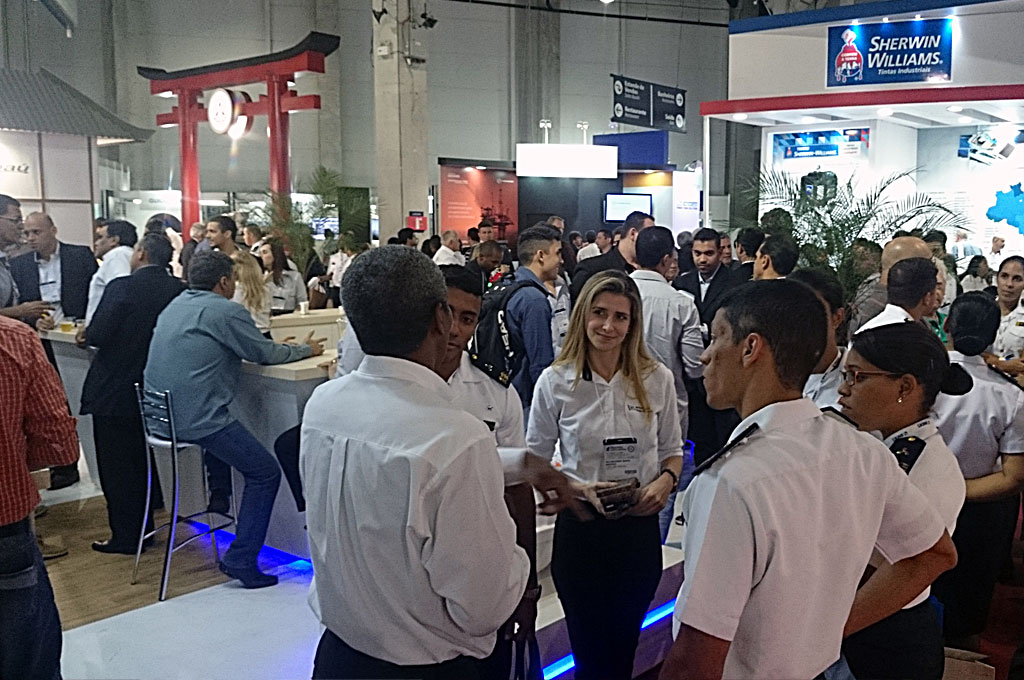
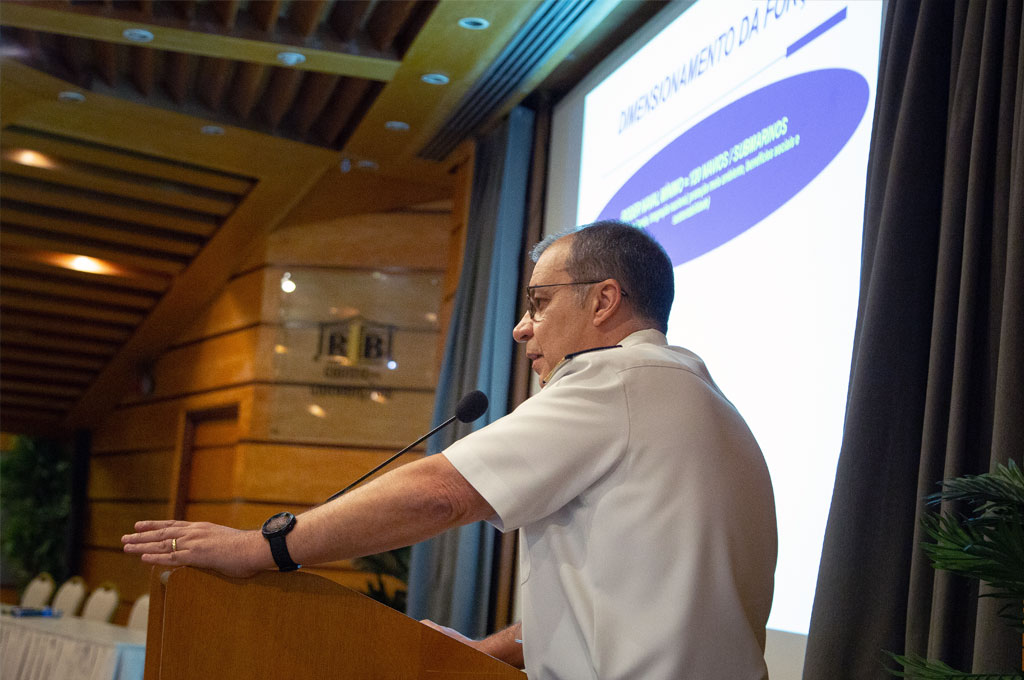
The information was provided by Vice Admiral Petrônio Augusto Siqueira de Aguiar, director of program management for the Brazilian Navy, during the panel “Perspectives on the Construction of Naval Vessels in the Brazilian Navy,” which opened the seminar “Scenarios of the Naval and Offshore Industry,” promoted by Portos e Navios, this Wednesday, the 14th.
Aguiar stated that, among the projects under consideration, the Navy is thinking beyond the Tamandaré Class, as it understands that it needs to increase the number of vessels. The business model for the acquisition of a new polar ship is currently being drawn up. And there are other projects that involve logistics support vessels, ocean support vessels, hydro-oceanographic vessels and ocean and river patrol vessels.
“We do not have a priority because we need all of this. Budgetary viability is important and we are constantly seeking sources of resources to increase the Navy’s budget, mainly in the discretionary sources category. The second source is capitalization, in which, in the last two years, we have been successful with Emgepron, which was capitalized for two projects: the Tamandaré and the polar ship,” said the vice admiral.
He also mentions agreements such as those with the National Agency of Petroleum, Natural Gas and Biofuels (ANP), which has resources for research, development and innovation. This will allow the construction of two oceanographic vessels together with the ANP and Petrobras. The fourth is the Merchant Marine Fund.
“There is a bill in Congress that aims to provide the Brazilian Navy with access to 10% of the Merchant Navy Renewal Fund. This will allow us to build some auxiliary vessels. We have projects that will be initiated when there is budget viability. Depending on the source of funds, we will go for one type of vessel or another,” he said.
He reiterated that the Brazilian Navy has no intention of building ships outside the country. The goal is to contribute to the shipbuilding sector and to the development of the defense industrial base. “In addition to generating employment and income, as is happening now in Itajaí, which will grow from 2 to 6 direct jobs. But we need stable financial resources,” said Aguiar.
He explains that the Navy has seven strategic programs: personnel, nuclear program, construction of the naval complex of the second squadron and the second marine force in the North and Northeast, system and monitoring of the Blue Amazon, navigation security system, and two dedicated to the formation of the naval fleet, which is to obtain full operational capacity and build the core of naval power.
“Our processes today are based on Capability-Based Planning (PBC), a set of procedures aimed at preparing the Navy developed in conjunction with the Ministry of Defense with a view to acquiring the appropriate capacity to meet the interests and defense needs of the State, observing budgetary and technological limits,” he defined.
The Navy also works with life cycle management divided into six phases: conception, project development, production (ship construction), operation and support, and decommissioning.
“Several studies around the world indicate that 75% of the time is spent on the operational, support and decommissioning phases. Therefore, we must pursue the lowest costs and deadlines and the best performance and quality. Investment and financial resources are needed at all stages. With intention and viability, we will be able to produce the ships that the Brazilian fleet needs,” he believes.
He emphasizes that the Navy currently operates with minimal naval power, in his assessment, what can be had and not what is necessary. There are 120 ships and submarines covering the entire Brazilian fleet and the nine naval districts – maritime and river – and the nautical signaling services. This leads one to believe that the Navy has a reasonable presence in the state, with sustainability to maintain and operate its ships.
Edesio Teixeira Lima Junior, president of Emgepron, detailed the operation of the public company with private legal personality, which operates in a wide range of activities related to the maritime economy – construction, repair, consulting – and has expertise in structuring complex projects in the area. An example is the Navy's programs for the recovery of the core of naval power and the construction of naval power.
“To fulfill its mission, Emgepron operates in three strategic areas: the Navy’s strategic programs, the maritime economy, and export platforms. One of its responsibilities is to develop the defense industrial base and, therefore, it needs to export. A State alone cannot build this base. It needs to export and insert itself into global value chains,” he concluded.
Source: Ports and Ships