
Source: Ports and Ships / Danilo Oliveira
• Shipyard, which is building components for P-83 modules, has been considering building offshore vessels. Repair area has grown by 20% in the last 2 years
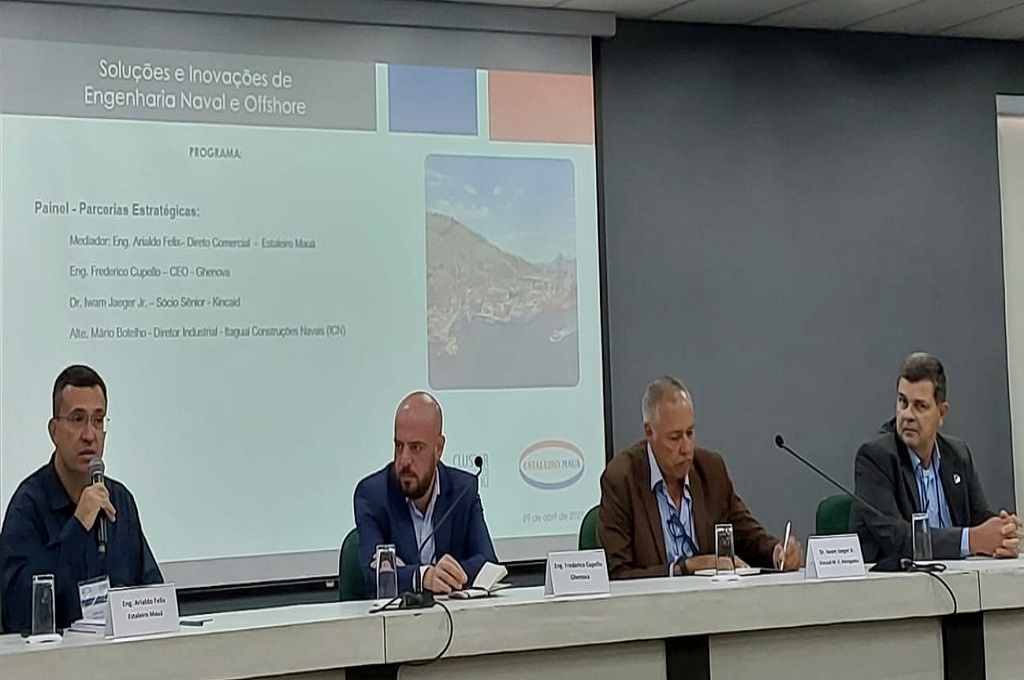
The Mauá Shipyard in Niterói (RJ) intends to strengthen shipbuilding in the coming years by increasing the production of metal structures at its facilities. The strategy, which will help consolidate its ongoing recovery process, also targets projects for new maritime support vessels that will be built in Brazil to meet Petrobras' demand. The group also has positive prospects for repairs, which have been growing by around 20% in the last two years.
The idea of resuming the construction of offshore support vessels is to bring to Mauá projects that are smaller in size than oil tankers, but that have high added value and that can be contracted with the shipowners who win the Petrobras tenders. The shipowners need the construction price to bid and to set up their capex, since these Petrobras tenders are based on the daily operating rate and provide for new ships with local content.
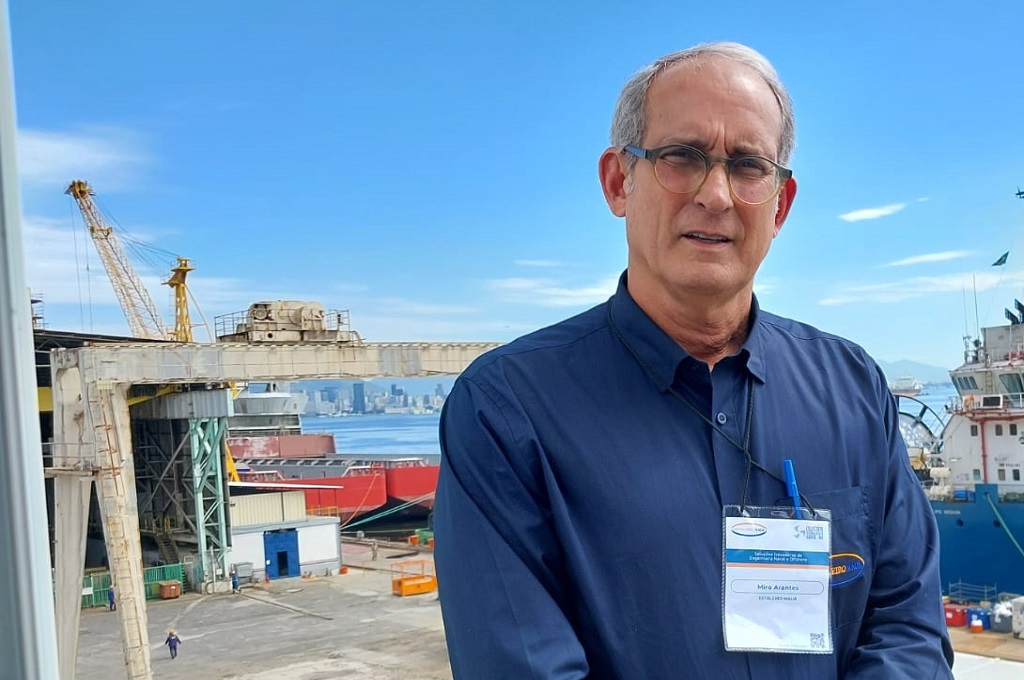
“Several shipowners have been asking us for prices. We gave them prices [quotes] for the PSV [supply vessels] and OSRV [oil spill response] tenders, and now we will also give prices [for RSVs — vessels equipped with robots]. We are providing prices to the shipowners who are entering the Petrobras tender,” said Miro Arantes, CEO of Estaleiro Mauá, in an interview with Portos e Navios.
The executive added that the fabrication of metal structures and offshore structures takes advantage of the shipyard's characteristics, which is an industrial park with the capacity to produce these large structures. Mauá was subcontracted by Seatrium (Jurong) to produce components for the modules of Petrobras' P-83 platform. "I don't see Mauá building the modules. I see Mauá building part of the modules and constructing them where Brasa (Ilha da Conceição) used to be, repeating what was done there at the time of Brasa," he stated.
In addition to the offshore pancake modules, the Niterói shipyard manufactured structures for Subsea7 and Technip. “This is another market in which we work, we were able to certify and qualify and we are executing. We were certified, with qualified welders to manufacture large structures for Technip and Subsea7”, he mentioned.
Arantes emphasized that the Mauá and Ilha da Conceição (formerly Brasa) sites are well located in Guanabara Bay, which favors module projects for future platforms. “There are other companies, Chinese and Korean, contacting us because the upcoming FPSO bids have local content requirements that need to be fulfilled in Brazil,” he revealed. He noted that the opportunities will depend on the strategies adopted by the winning bidders to fulfill the local content requirements.
In recent years, with the slowdown in orders, Mauá has strengthened its area of maintenance, repairs, and general vessel services. Arantes highlighted that the shipyard grew this activity by around 20% in 2023 and 2024. "From 2024 to 2025, we believe we will increase our revenue in this repair and services segment again by 20% to 25%," he projected.
Currently, Mauá Shipyard has around 1.250 workers, with the expectation of reaching 1.500 by the end of 2025. According to Mauá's CEO, this workforce is currently dedicated mainly to offshore pancake services and other ship maintenance and upgrade work. He estimates that 90% of the shipyard's repair capacity is occupied.